Gui Community Energy Project

Solar Cold-Chain, Productive Energy and Community Innovation


Status:
Operational


Location:
Gui District, FCT, Abuja, Nigeria


Project ID:
GUI

Overview

The pilot facility is operational and in community use. Solar generation, battery storage, cold-storage, device-charging, ventilation, CCTV and environmental-monitoring systems are installed and functioning. Baseline assessment, operational monitoring and data collection are ongoing, with the formal project launch on 18 September 2026.

Project Challenge

Reliable energy access alone does not necessarily translate into improved livelihoods. Communities also require practical services that convert energy into useful outcomes, including food preservation, communication, productive activity and access to appropriate technology.

Vision

To develop and evaluate a community-centred renewable-energy system that combines engineering performance, productive energy use, research, community participation and long-term sustainability.

Objectives

  • To develop a solar-powered community facility supporting cold storage and device charging
  • To evaluate technical and operational performance;
  • To understand interactions among technology, users, governance, maintenance and sustainability;
  • To support student and collaborative research;
  • To establish an evidence base for future scale-up; and progressively integrate monitoring and data-driven learning.

Technical Description

The Gui Community Energy Project centres on a solar-powered community kiosk integrating photovoltaic generation, battery energy storage, an energy-efficient cold-storage/freezer system, mobile-device and power-bank charging, ventilation, security monitoring and environmental sensing. The installed system now supports community use while generating operational and research data on energy production, storage, demand, cooling performance and local environmental conditions. Earlier experimental cooling concepts using Peltier modules and a DC-compressor arrangement formed part of the project’s development and learning phase but were found unsuitable for community-scale deployment. The system was subsequently redesigned around a more robust energy-efficient cooling solution, illustrating the project’s iterative engineering and evidence-based development approach.

Community Context

Seed-funded by the ANU School of Systems and Cybernetics, the project has been implemented in partnership with the Gui community and its local leadership, with community participation continuing through operation, monitoring and evaluation. Community engagement, land allocation, facility governance, productive-use needs, maintenance responsibilities and user feedback are treated as integral components of the overall energy system rather than as external considerations. This socio-technical approach recognises that the long-term effectiveness and sustainability of community-energy infrastructure depend not only on technical performance, but also on the interaction between technology, users, local institutions, operational practices, governance arrangements and community stewardship.

Research Dimension

The project serves as a living research environment for renewable energy, cold-chain systems, productive use of energy, IoT and instrumentation, data analytics, systems and cybernetics, community governance, socioeconomic impact and engineering education. It provides a real-world setting for examining the interactions among technical performance, users, operational practices, environmental conditions, governance and long-term sustainability.

Scale-Up Vision

The next phase envisages scaling the pilot into a larger community-energy and productive-use facility incorporating up to 20 kWp of photovoltaic generation, battery energy storage, expanded cold-storage capacity of approximately 5 tonnes, enhanced device-charging and productive-energy services, and integrated IoT-based monitoring and data logging. The proposed scale-up is intended to support a larger beneficiary population while generating stronger evidence on technical performance, livelihood benefits, governance, maintenance and long-term sustainability. Final capacity, configuration and implementation will remain subject to detailed engineering design, funding availability, community requirements and validation of findings from the pilot phase.

Project Journey

Key stages in the development, implementation and learning journey of this project.

November 2025-March 2026


Pending

Experimental Cooling Development


Completed

The project team and participating students undertook experimental development of cooling solutions suitable for integration into the proposed solar-powered community facility. Initial investigations considered low-energy cooling approaches, including Peltier-based systems and a DC-compressor configuration, as part of the technical and student research activities.

Key learning:

Early-stage prototyping demonstrated the importance of validating laboratory-scale concepts against real community operating requirements before committing to full deployment. The exercise also provided valuable hands-on research and engineering experience for participating students.


July 2026


Approximate

Procurement of Solar Energy System Components


Completed

Following the deployment of the fabricated kiosk to the project site, the major solar-energy system components required for field operation were procured. These included the photovoltaic solar panels, inverter and battery storage system forming the core electrical-energy infrastructure for the community facility.

Key learning:

Separating civil/fabrication deployment from the procurement of the final energy system allowed the project team to refine component selection in response to actual site and operational requirements. Procurement therefore formed an important transition between physical deployment and functional energy-system integration.

9 July 2026

Land Allocation for the Community Energy Facility


Completed

His Royal Highness, Alhaji Alhassan Yussuf, District Head of Gui, formally allocated a parcel of land measuring approximately 30 ft × 38 ft within Gui community for the installation and operation of the community energy project.

Key learning:

Formal land allocation strengthened community ownership and provided an identifiable physical base for the project. Documented community agreements are important for long-term infrastructure security, continuity and future scale-up.

July-August


Approximate

Identification and Mitigation of Kiosk Thermal Overheating


Completed

Following installation of the energy and cold-storage equipment, the project team observed that the metal-sheet kiosk experienced excessive internal heat accumulation. The elevated ambient temperature created an unfavourable operating environment for electrical, electronic and cooling equipment.
To address the problem, two extractor fans were procured and installed to improve ventilation and remove accumulated hot air from within the kiosk. Subsequent observation showed a noticeable reduction in the internal ambient temperature.

Key learning:

The thermal behaviour of the enclosure emerged as an important systems-level consideration that was not fully apparent during workshop fabrication. The experience demonstrated that enclosure material, solar heat gain, ventilation, equipment heat dissipation and local environmental conditions must be considered as part of the overall energy-system design.
The intervention also illustrates the project’s iterative feedback process:
Observation → Problem Identification → Engineering Response → Improved Operating Condition

22 July 2026

Kiosk Deployment and Installation


Completed

Following fabrication and preparation at Nile University of Nigeria, the solar charging and cold-storage kiosk was transported to Gui community and positioned at the allocated project site. Field installation of the energy system and supporting infrastructure was subsequently undertaken, with the project reaching a substantially completed installation stage pending final testing and commissioning.

Key learning:

Transition from workshop fabrication to field deployment revealed the importance of transport planning, site preparation, community coordination, physical security and final on-site integration. Deployment should be treated as a distinct engineering phase rather than simply the movement of completed equipment.

24 July 2026

Transportation and Installation of Solar Energy System


Completed

The photovoltaic panels, inverter, battery system and associated installation materials were transported to Gui community for field installation. A team comprising technical personnel, undergraduate students and the Project Team Lead participated in the installation activities, providing practical exposure to real-world renewable-energy system deployment.

Key learning:

Field installation demonstrated the importance of integrating professional technical supervision with student experiential learning. The activity also reinforced the need for careful logistics, site coordination, safe installation practices and verification of equipment integration under actual field conditions.

18 August 2026

Procurement, Transportation and Installation of Cold-Storage and CCTV


Completed

The energy-efficient freezer selected for the community cold-storage application and the DVR-based CCTV surveillance system were procured and transported to the Gui project site for installation. Installation activities were carried out under difficult weather conditions, with repeated heavy downpours disrupting work and extending the field installation process.

Key learning:

The installation experience highlighted the effect of environmental and weather conditions on field engineering activities. Even relatively straightforward equipment installation can be significantly affected by rainfall, site exposure, access and protection of tools and equipment. Future fieldwork should therefore incorporate weather contingencies into planning and scheduling.

5 September 2026

Weather Station Procurement and Environmental Monitoring Preparation


Completed

A weather station was procured to support environmental monitoring and strengthen the project’s technical and research data collection capability. The weather station is intended to provide environmental measurements that can be related to photovoltaic generation, equipment operating conditions and cold-storage performance.

Key learning:

Renewable-energy system performance should not be evaluated independently of environmental conditions. Incorporating weather data creates a stronger evidence base for interpreting photovoltaic generation, ambient temperature effects, cooling demand and overall system performance.

8 September 2026

Operational Monitoring, Community Use and Continuous Learning


Ongoing

Following commissioning, routine technical, operational and community-use monitoring will commence. Planned monitoring includes photovoltaic generation, battery state of charge, total energy consumption, cold-storage energy use, internal and ambient temperature, device-charging activity, product-storage transactions, weather conditions, equipment alarms, downtime, maintenance and selected community-use indicators.
Data from the technical system will be complemented by operational logs and subsequent community follow-up assessments.

Key learning:

Monitoring is most valuable when it becomes part of an active feedback process rather than simply an exercise in data collection. The project will use observations and performance evidence to support maintenance, operational adjustments, service improvement and future engineering decisions.
The intended learning cycle is:
Observe → Measure → Analyse → Decide → Intervene → Review → Improve

September 10-16, 2026

Integrated System Preparation for Testing and Commissioning


Completed

Following installation of the solar-energy system, freezer, CCTV infrastructure, ventilation improvements and environmental-monitoring equipment, the project entered the integrated pre-commissioning phase. The focus of this stage is to verify that the individual system components operate safely and correctly as a combined community-energy facility.
Preparation includes confirmation of electrical connections, protection systems, battery operation, photovoltaic generation, cold-storage performance, charging functionality, monitoring equipment and system safety.

Key learning:

Installation completion does not automatically constitute operational readiness. Integrated verification is required because interactions between individual subsystems may reveal issues that are not apparent when components are assessed independently.

18 September 2026

Baseline Community and Productive-Use Assessment


Ongoing

A structured community baseline assessment is being prepared to document conditions before routine operation of the facility. The assessment will examine existing electricity access, mobile-device charging practices, food preservation and cold-storage needs, productive activities, community expectations, governance considerations and potential service demand.
The instrument has been designed for interviewer-administered field use, including participation by respondents who may have limited literacy. A pilot survey will precede the full baseline assessment.

Key learning:

Technical performance alone cannot demonstrate community impact. Establishing pre-operation conditions is necessary to evaluate whether the project subsequently produces measurable changes in energy access, service use, food preservation, livelihoods and user experience.

23 September 2026

Testing and Commissioning/Launch


Completed

The Gui Community Energy Project has successfully undergone physical launch, structured testing and commissioning, marking its transition into routine community operation. The commissioning process assessed electrical safety, photovoltaic system performance, battery operation, AC distribution, cold-storage functionality, device-charging services, protection systems, CCTV operation, environmental monitoring, metering and data-logging functions.
The testing and commissioning exercise also established the initial technical and operational baseline for the facility. This baseline will support ongoing performance monitoring, evaluation of system reliability and energy use, assessment of cold-storage and charging services, and comparison of future operating data as the project progresses through sustained community use and research monitoring.

Key learning:

Formal commissioning provides the transition from an installed engineering system to a verified operational system. The resulting measurements, test records and observations will provide essential reference data for future monitoring, research and maintenance.

November -December 2025


Approximate

Implementation Team Constituted


Completed

The project implementation team was formally constituted to coordinate the technical, research and administrative delivery of the Gui Community Energy Project.

Key learning:

Early assignment of technical and administrative responsibilities provided a clearer governance structure for project implementation and subsequent community engagement.

By March 2026


Approximate

Cooling Evaluation and System Redesign


Completed

Performance evaluation of the initial Peltier-module and DC-compressor cooling concepts showed that the experimental configuration was not sufficiently suitable for reliable community-scale deployment. The project was consequently redesigned around a more robust and energy-efficient deep-freezer-based cooling solution while retaining the experimental work as part of the student research and learning process.

Key learning:

The redesign reinforced the value of evidence-based engineering decisions. A technically interesting prototype does not necessarily translate directly into a practical community solution; reliability, maintainability, capacity, cost and user requirements must be considered alongside experimental performance.

July 2026 onward


Approximate

Scale-Up Planning and Development of an Expanded Community-Energy


Ongoing

Planning is underway for a larger community-energy and cold-chain facility building on lessons from the pilot installation. The emerging scale-up concept considers approximately 20 kWp of photovoltaic generation, battery energy storage, expanded cold-storage capacity, smart monitoring, IoT-based data logging and additional productive-energy applications.
The expanded project is intended to use technical, community and operational evidence from the Gui pilot to guide its design and implementation.

Key learning:

Scale-up should not consist simply of increasing equipment capacity. Decisions regarding the next phase should be informed by actual energy demand, cold-storage utilisation, community behaviour, maintenance experience, governance, affordability, system performance and documented socioeconomic outcomes.

People & Community

The project brings together researchers, engineers,
students and community stakeholders in the design,
implementation, operation and learning process.

Engineering Team

TGST. Caleb

Technical Officer

Nile University of Nigeria · Mechatronics Engineering

Engr. Caleb Nwafor is the Technical Officer for the Gui Community Energy Project. He is an engineering graduate with a strong interest in electrical and electronic systems, practical problem-solving and hands-on technical work. He supports project implementation, equipment handling, field activities, testing and routine technical tasks while working closely with the wider project team. He is committed to continuous technical learning, teamwork and the development of practical engineering skills through real-world project experience.

Investigator

Dr Safiya Okai-Ugbaje

Chief Investigator

Australian National University · School of Cybernetics / School of Systems

Dr S.O Ugbaje is the Chief Investigator for the Gui Community Energy Project and provides overall research leadership, academic coordination and project oversight. She guides the project’s research direction, supports the integration of systems and cybernetics approaches into the community-energy programme, and coordinates the academic and investigative activities that underpin project implementation, monitoring and evaluation. Her role includes supervising research development, supporting interdisciplinary collaboration, strengthening methodological rigour, and ensuring that project activities contribute to meaningful research, learning and community impact.

Researcher

Engr. Halima Sadia Yakubu

Project Data Analyst

Nile University of Nigeria · EEE

Engr. Halima Sadiya Yakubu is a Researcher and Project Data Analyst on the Gui Community Energy Project. She contributes to technical project implementation, data collection and analysis, research documentation and the preparation of technical reports. Her role supports the systematic interpretation of project data generated from field activities, energy-system operation, monitoring and community-based assessments. She also contributes to technical coordination and project implementation activities, helping to translate operational and research data into evidence that supports project evaluation, learning and decision-making.

Project Leadership

Engr. Paul Okpe

Project Team Lead

Nile University of Nigeria · Electrical Electronics Engineering

Engr. Paul Okpe Michael is the Technical Lead and Investigator for the Gui Community Energy Project, providing engineering leadership, project implementation oversight and coordination of field activities. He is a Chief Technologist at Nile University of Nigeria, a doctoral researcher in renewable energy and microgrids, and a Visiting Academic Fellow with the Australian National University School of Systems and Cybernetics. His work focuses on renewable energy systems, microgrids, energy management, instrumentation, productive use of energy and community-based engineering solutions. Within the Gui project, he leads the technical design and implementation of the energy system, coordinates testing, commissioning and operational monitoring, supports student research and field investigations, and contributes to the integration of engineering, systems thinking and community needs in evaluating the long-term sustainability of the project.

Community Leadership

HRH Hakimi Alhassan Yussuf

District Head of GUI

GUI District, FCT · Chieftaincy

HRH Alhaji Alhassan Yussuf is the District Head of Gui, Federal Capital Territory, Abuja. He has provided community leadership and institutional support for the Gui Community Energy Project, including facilitating engagement with the community, supporting the allocation of land for the project facility, and promoting cooperation between the project team, local leadership and community members. His involvement has been important in strengthening local participation, governance and community stewardship of the project.

Project Leadership

MRS IJEOMA ITEGHETE

PROJECT IMPLEMENTATION AND ADMINISTRATIVE SUPPORT

Nile University of Nigeria · MARKETING/CONSULT

Mrs Ijeoma Uche-Iteghete contributes to the Gui Community Energy Project through project implementation, administrative coordination, marketing and public relations support. She brings strong skills in stakeholder communication, public engagement, institutional liaison, project visibility and relationship management. Her role also includes supporting procurement, logistics, documentation and field implementation activities, helping to ensure that project operations are effectively coordinated and clearly communicated to relevant stakeholders. Her combined strengths in administration, marketing and public relations support both the internal delivery of the project and its external engagement with partners, institutions and the wider community.

Student Researcher

Miss Blossom Ikuru

Web Content Creative Officer

Nile University of Nigeria · Mechatronics Engineering

Miss Blossom is a Mechatronics Engineering undergraduate and Student Researcher with the Gui Community Energy Project, where she contributes as a web content creator, supporting the documentation and digital communication of project activities. Her research interests include systems and product development through engineering design, prototyping and practical implementation. Beyond engineering, she is a talented musician who plays the church organ and piano keyboard. She also has a strong interest in Nigerian public affairs and aspires to contribute meaningfully to public leadership and civic development in the future.

Student Researcher

Miss Aisha Wase

Research Assistant

Nile University of Nigeria · Civil Engineering

Aisha Wase is a Civil Engineering undergraduate student researcher with an interest in sustainable infrastructure, community development, and interdisciplinary engineering solutions. As part of the project research team, she contributes to field activities, data collection, technical observations, and community-focused research aimed at improving the sustainability and impact of renewable energy interventions.

Field Evidence

Selected field evidence documents the development,
installation, testing, community engagement and learning
processes associated with the project.

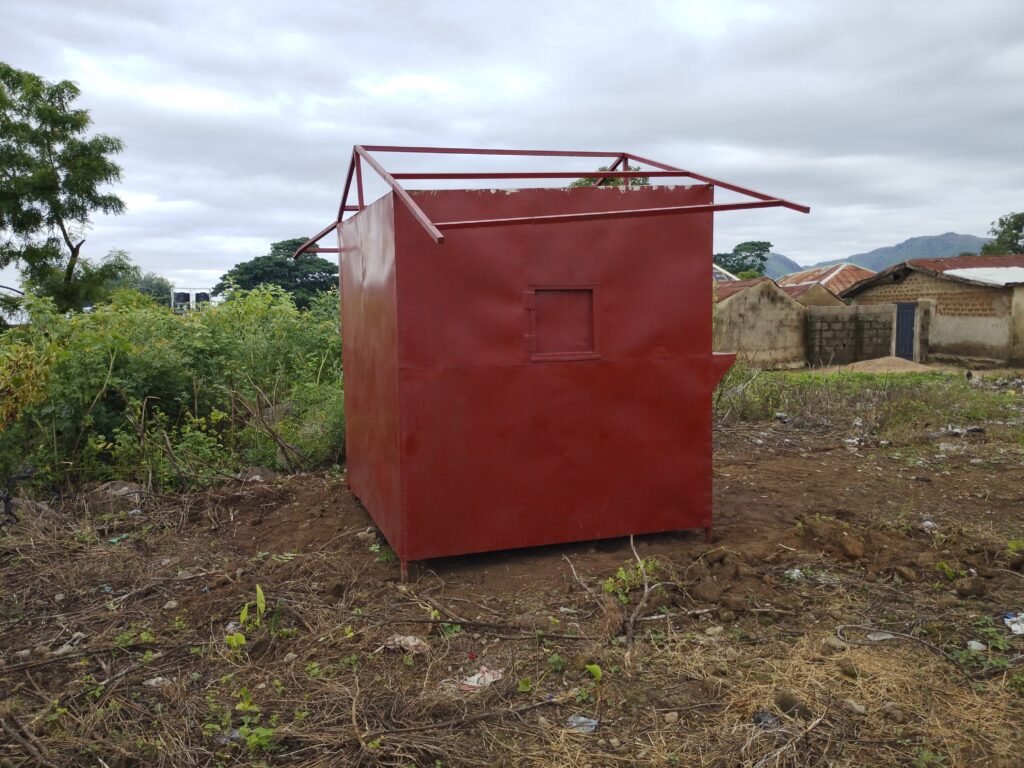
Solar community energy kiosk being deployed at the Gui Community Energy Project site in Abuja.
Photograph

Deployment of the Solar Community Energy Kiosk to Gui

Gui Community, Gui District, FCT, Abuja, Nigeria

The solar-powered community energy kiosk arriving at the project site in Gui Community following fabrication and preparation for field deployment.
Source:
Gui Community Energy Project / Engr. Paul Okpe Michael

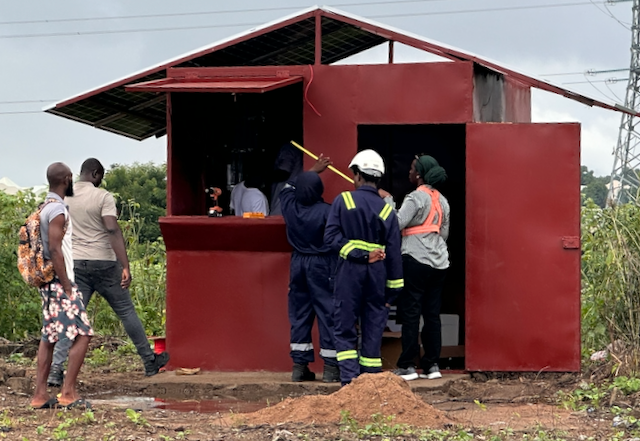
Solar panels, inverter and battery system being installed at the Gui Community Energy Project site.
Photograph

Solar Panel, Inverter and Battery Installation at Gui

Gui Community Energy Project Site, Gui District, FCT, Abuja, Nigeria

Technicians, undergraduate students and project-team members installing the photovoltaic panels, inverter and battery system at the Gui Community Energy Project site.
Source:
Gui Community Energy Project Team

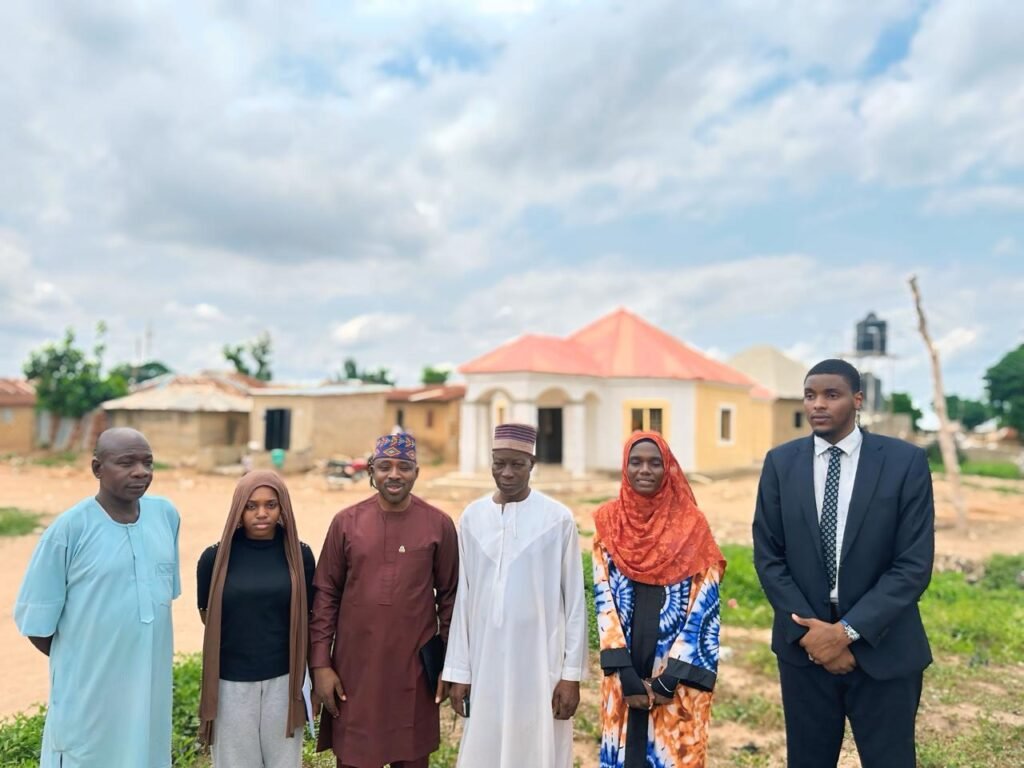
Project team and community representatives during site engagement and land-allocation activities for the Gui Community Energy Project.
Photograph

Community Engagement and Land Allocation Evidence

20 May 2026
—
Pending
Gui Community, Gui District, FCT, Abuja, Nigeria

Community engagement and formal site-allocation activities supporting the establishment of the Gui Community Energy Project in Gui District, FCT, Abuja.
Source:
Gui Community Energy Project Team

Live Data & Monitoring

Monitoring active · Web integration in development

The Gui Community Energy Project is currently monitored through
the native online platforms associated with its installed systems.
The solar-inverter monitoring platform records photovoltaic
generation, battery state of charge, load consumption and related
electrical parameters, while the weather station continuously
records local environmental and meteorological conditions.
Integration of these monitoring streams into the CyberEnergy Commons
web platform is under development. Public dashboards will be
introduced progressively following data validation, quality assurance
and appropriate access controls.


Explore Live Data