COMMUNITY ENERGY IN PRACTICE
Projects
CyberEnergy Commons develops and studies community-energy projects as living socio-technical systems. Our work combines renewable-energy engineering, productive energy use, community participation, research, monitoring and evidence-based learning to understand how energy interventions perform, adapt and create value in real community settings.
Flagship project
Gui Community Energy Project
Solar Cold-Chain, Productive Energy and Community Innovation
Gui District, FCT, Abuja, Nigeria
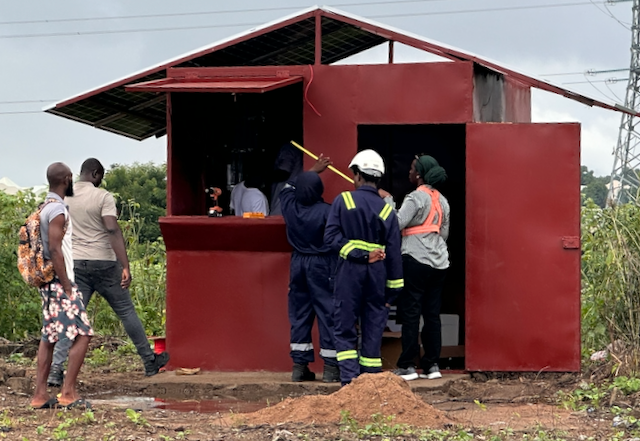
The Gui Community Energy Project is operating as a community-based renewable-energy pilot supporting cold-storage services, device charging, environmental monitoring and applied research. Community use has commenced, while baseline assessment, operational monitoring and data collection continue to support evaluation of technical performance, productive energy use, governance and long-term sustainability.
Operational community-energy pilot · Formally launched and commissioned on 22 September 2026
The Gui Community Energy Project integrates solar photovoltaic generation, battery energy storage, cold-storage services, device charging, environmental monitoring and applied research. Following successful testing and commissioning, the facility is now in routine community operation, with ongoing monitoring and evaluation supporting research, learning and future scale-up planning.
Project focus
- Solar photovoltaic energy
- Battery energy storage
- Community cold storage
- Mobile-device charging
- Environmental and energy monitoring
- Community participation and governance
- Applied research and impact evaluation
How our projects evolve
CyberEnergy Commons projects are developed as iterative learning systems. Each project moves through a sequence of technical, community and research stages, with evidence from one stage informing decisions in the next.
Concept
Define the energy challenge, users, context and intended outcomes.
Co-design
Engage community stakeholders and translate needs into practical system requirements.
Prototype
Develop, test and refine technical and service concepts before wider deployment.
Deployment
Install the system, prepare users and establish operating arrangements.
Operation
Deliver energy-enabled services in the real community environment.
Monitoring
Track technical performance, usage, environmental conditions and operational issues.
Evaluation
Assess engineering performance, community outcomes, governance and sustainability.
Learning & Scale-up
Use evidence to improve the system, guide replication and inform future projects.
From projects to evidence
Each CyberEnergy Commons project is documented through structured milestones, research studies, datasets, technical outputs, field evidence and impact indicators. This allows implementation experience to become a reusable evidence base for learning, improvement and future scale-up.
Future Projects
CyberEnergy Commons is designed to support additional community-energy initiatives as they are developed. New projects will be added to this platform when their scope, status and public information have been sufficiently verified. This allows the platform to grow while maintaining clear distinctions between active, planned and completed work.
Current public portfolio: Gui Community Energy Project.